

Knowing when to fertilize St. Augustine grass in Central Texas matters more than which bag you buy, and it’s the part almost everyone gets wrong. The most common lawn mistake in this part of Texas is feeding too early. A warm week in February sends people to the garage, the grass is still dormant, and the fertilizer either washes off or feeds the winter weeds that woke up first.
A feeding calendar built on the calendar will be wrong most years.
Let the Soil Temperature Tell You
Soil temperature triggers green-up, not air temperature. St. Augustine starts moving once soil in the root zone holds steadily around 65 degrees, and in Central Texas that lands anywhere from late March to early
May depending on the year.
The lawn will tell you before a date does. When most of it has turned green and you’ve mowed twice, it’s ready to eat.
That’s a better signal than anything printed on a bag, and it costs nothing to watch for.
What Actually Goes Down
Once the timing is right, the product question matters. Organic fertilizer releases as soil biology breaks it down, so a slow-release nitrogen source keeps working for weeks instead of dumping everything into the first rain.
Salt-free nutrients also won’t burn a lawn that’s greening up unevenly, which is what a Central Texas April usually looks like.
The Two Feedings That Matter
Two anchor feedings carry a St. Augustine lawn through the year here. What sits between them is correction, not more nitrogen.
Spring feeding goes down once the lawn is actively growing across most of its area, not on a fixed date. Feeding grass that’s still half dormant is money spent on henbit. In a normal year that’s April rather than March, and in a cold year it slides later still.
Make it a granular application. It spreads evenly and releases over weeks, and watering it in afterward moves it off the blades and into the soil where microbial activity can start breaking it down into something roots can take up.
Fall feeding is the one most people skip and the one that decides how next April looks. Top growth slows while roots keep working, so a feeding then goes into root development rather than into blade you’ll be mowing twice a week.
Correct Before You Feed More
Yellow grass isn’t always hungry grass.
Iron for chlorosis is the answer on the high-pH soils common west of I-35, where iron is present in the ground but locked up where roots can’t reach it. Adding nitrogen there does nothing except grow more blade the roots can’t support.
Soil amendments and humates address what a soil test actually found, rather than what a bag label assumes about an average lawn.
Mistakes Worth Avoiding
- Feeding while the lawn is still dormant
- Going by a date instead of by the grass
- Heavy nitrogen in the deep heat of summer
- Treating yellow blades as a nitrogen shortage
- Feeding a lawn nobody has ever tested
- Skipping the fall feeding
What to Do Next in Your Yard
- Watch for a full spring green-up before anything goes down
- Mow twice before the first feeding
- Test the soil once, then build the year around it
- Feed spring and fall, not monthly
- Pair a feeding with compost where the soil is thin
- Water it in the same week
Each year on this pattern the soil holds more and needs less from a bag. Soil biology ends up doing the work a synthetic program has to keep buying.
Did you know?
Warm-season grass doesn’t green up on a date. It waits for soil in the root zone to hold around 65 degrees, which is why one Central Texas spring starts in March and the next waits until May.
Feeding St. Augustine, Answered
Most of what people ask about fertilizing here is a timing question rather than a product question, which is the right instinct. These come up most in Kyle, Buda and San Marcos yards.
When is it too early to fertilize in Texas?
Any time the lawn is still mostly dormant. If it hasn’t greened across and been mowed a couple of times, it can’t use the food. February and early March feedings mostly grow winter weeds and run off with the next rain.
How many times a year should I fertilize?
Twice is the honest answer for most St. Augustine lawns here, spring and fall, with corrections in between if a soil test asks for them. Monthly programs are usually compensating for a product that doesn’t last.
Can I fertilize St. Augustine in the summer?
Light and careful, if at all. Pushing nitrogen at a lawn already under heat stress asks it to grow while it’s trying to survive. A compost top dressing does more for a lawn in July than another bag of fertilizer.
Should I overseed St. Augustine after feeding?
You can’t. There’s no commercial St. Augustine seed, it spreads by runners, so thickening comes from plugs, sod patches, compost and correct mowing height. Seeding talk applies to Bermuda lawns.
Is organic fertilizer safe around kids and dogs?
Yes. A kid-safe lawn is the direct result of nothing being sprayed. Compost and granular organics carry no re-entry interval, so nobody has to stay off the grass and no flag goes in by the sidewalk.
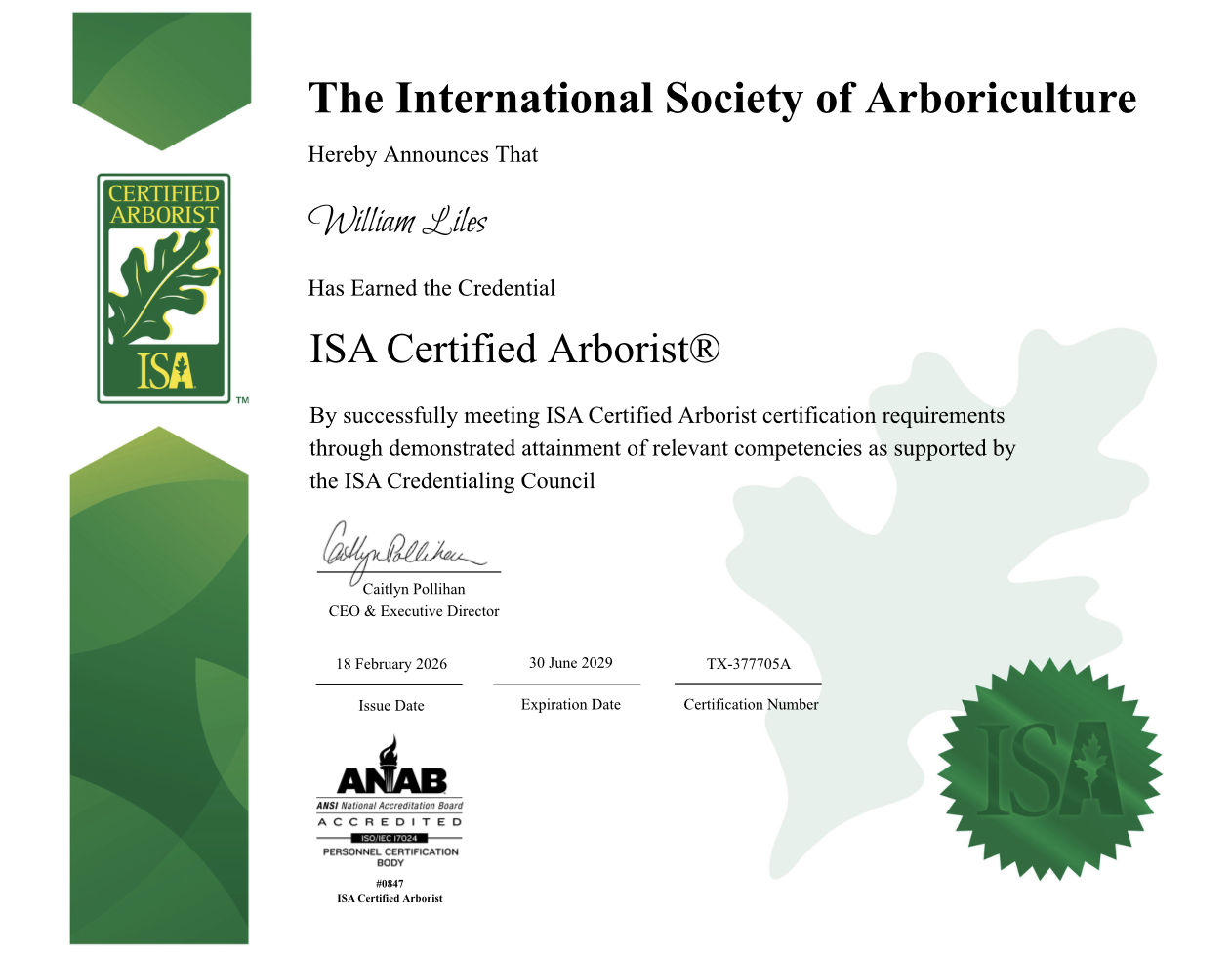
Authored by William “AJ” Liles, ISA Certified Arborist TX-377705A, TCEQ Licensed Irrigator LI0022271