

Local Lawn Care Service Areas in Central Texas
We know Kyle because we live in Kyle
Kyle
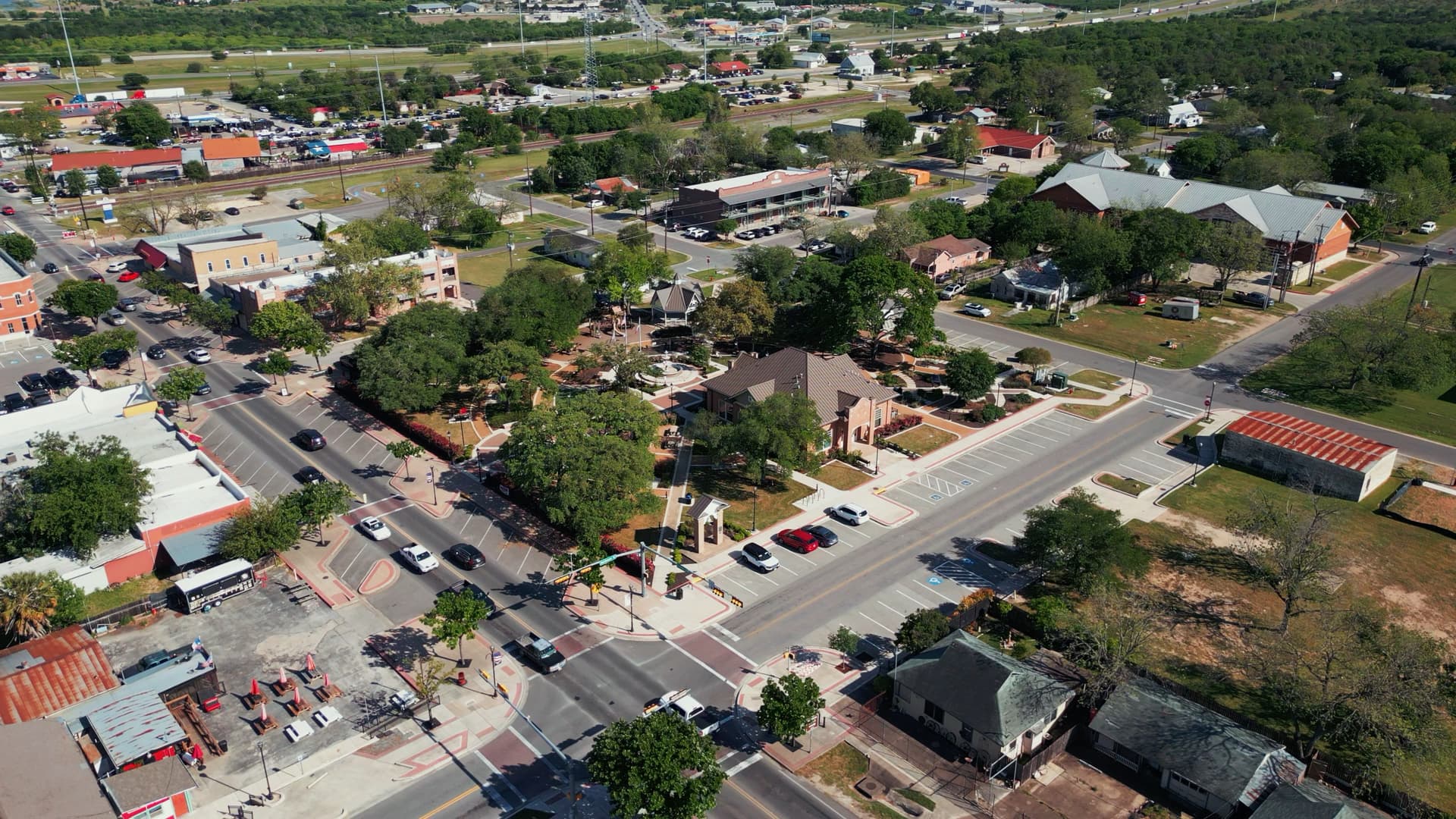
Kyle is home. The Green Dude has worked yards here since 2004, back when the town was a fraction of its current size, and the crews still run their densest routes inside the city limits. A Kyle address is where you’ll find the most stops already on the calendar.
What a Kyle yard needs depends a lot on which side of I-35 it sits on. East of the highway you’re on blackland clay that swells wet and shrinks dry, and neighborhoods like Post Oak have documented settling because of it. West of I-35 the soil thins out to caliche over limestone, where a shovel can hit rock a few inches down. Same city, two completely different approaches to planting and watering.
Housing age matters just as much. Established streets around Hometown Kyle and Waterleaf have mature shade that changes what grass you’ll be able to hold. Newer construction in 6 Creeks, Crosswinds, and Anthem starts on scraped fill, which is why those lawns often look fine for a season and then thin out. Compost top dressing and core aeration in spring are what fix that, and we run both.
Kyle currently sits under Amended Stage 2 drought restrictions. Spray zones water every other week on a day set by your address, from 7pm to midnight, while drip and soaker lines are allowed every week in the same window. Converting beds to drip is the legal way to get more water where roots actually are. Handheld hose watering stays open any day from 7pm to 10am, so you’re never fully shut out.
Buda
Buda is minutes up I-35 from Kyle, so turnaround there is close to what a Kyle address gets. It’s one of the two largest markets The Green Dude serves outside home base.
Growth is what defines Buda right now, and you can read it street by street. Sunfield is still building, and those new lawns land on compacted fill with almost no topsoil left, which is a hard start for grass. Whispering Hollow and Garlic Creek are past that stage and into maintenance, with mature street trees changing how much light the turf gets. Out toward Elliott Ranch and Ruby Ranch the lots get big, sometimes several acres, and the work shifts to acreage mowing and mature oak care. You’re dealing with a different job entirely on those properties.
Buda’s watering rules are tighter than Kyle’s, and they work differently. The city has been in Stage 3 since November 2024, with sprinklers limited to one designated day a week, odd addresses Wednesday and even Thursday, between 7 and 11 in the morning or evening. Drip and soaker lines are held to that same once-a-week day here. What they get is a wider set of hours, so a Buda bed conversion buys you time on the day you’ve got. Vegetable gardens are the exception and can be watered any day outside the 11am to 7pm block.
San Marcos
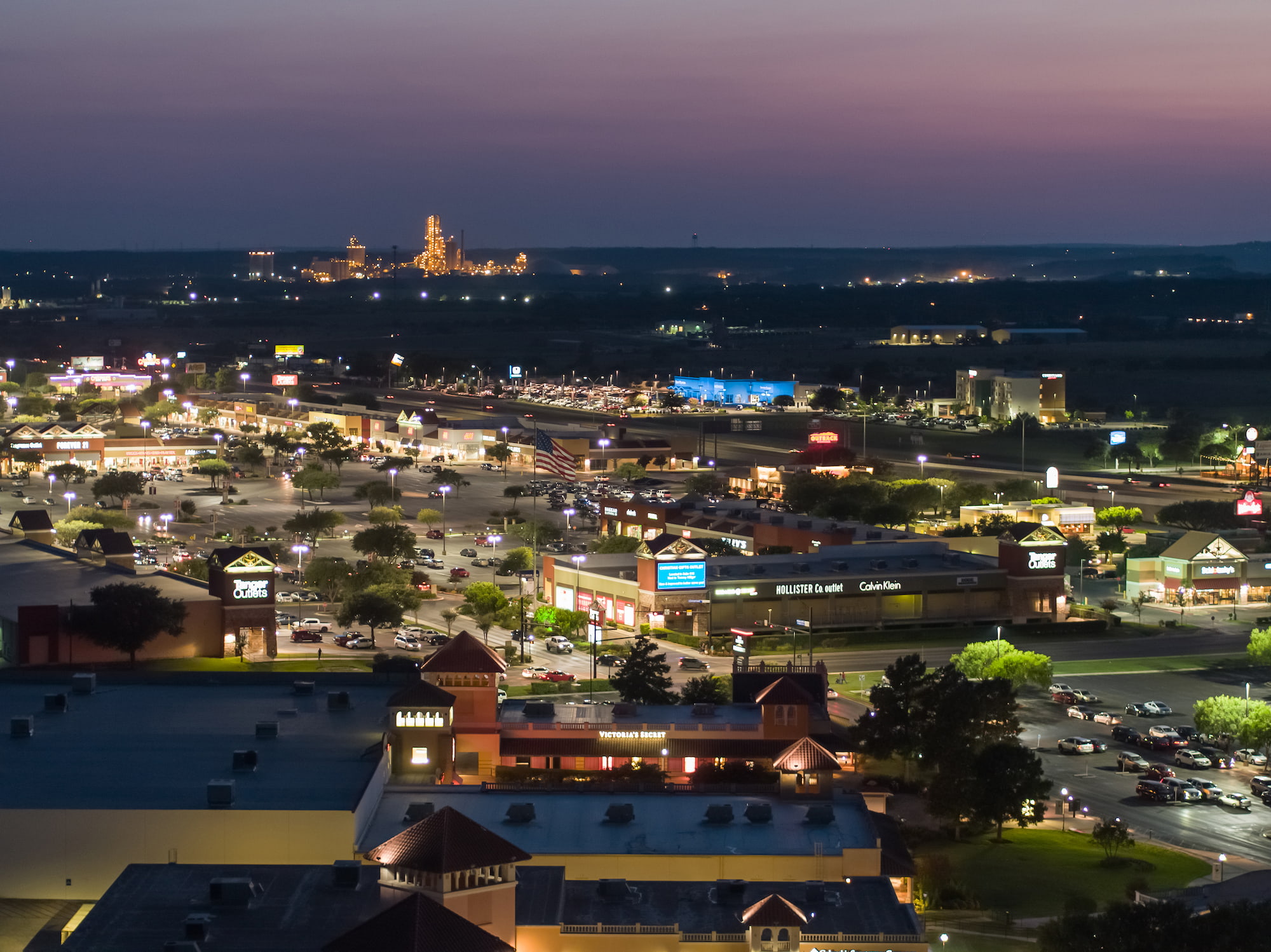
San Marcos runs on a different clock than the rest of the service area, because a university town’s rental property turns over on a lease schedule that doesn’t move. The Green Dude handles both owner-occupied yards and landlord turnovers there.
San Marcos neighborhoods vary more than you’ll find in most Hays County cities. La Cima was platted to keep its mature trees, so new houses went up under an existing canopy. Kissing Tree is a newer community with low-maintenance expectations. Blanco Gardens sits low near the water and carries silt in its soil from past flooding, which changes what grass will establish. Victory Gardens and Hughson Heights are older, with small lots, mature shade, and hand-scale work.
The city is in Stage 3. Automatic sprinklers run one day every other week, before 10am or after 8pm, while drip and soaker lines are allowed one day every week. That’s twice the frequency for drip, which makes bed conversions the single most useful upgrade on a San Marcos property.
Manchaca
Manchaca sits north of Kyle along the corridor into south Travis County. It’s unincorporated, so lot character varies more there than it does inside a city. Properties here run larger than the subdivision average.
You’ll find older homes on generous lots next to newer builds, which means one street can need acreage mowing and the next needs standard residential service. Mature trees are common, so shade management and canopy work come up more often than they do in newer Kyle subdivisions. Larger properties also mean irrigation coverage gaps that a standard subdivision system wouldn’t have, and those show up as dry corners well before anyone notices a broken head. The Green Dude services Manchaca on existing routes north out of Kyle, and estimates there are free like everywhere else we work.
Hays
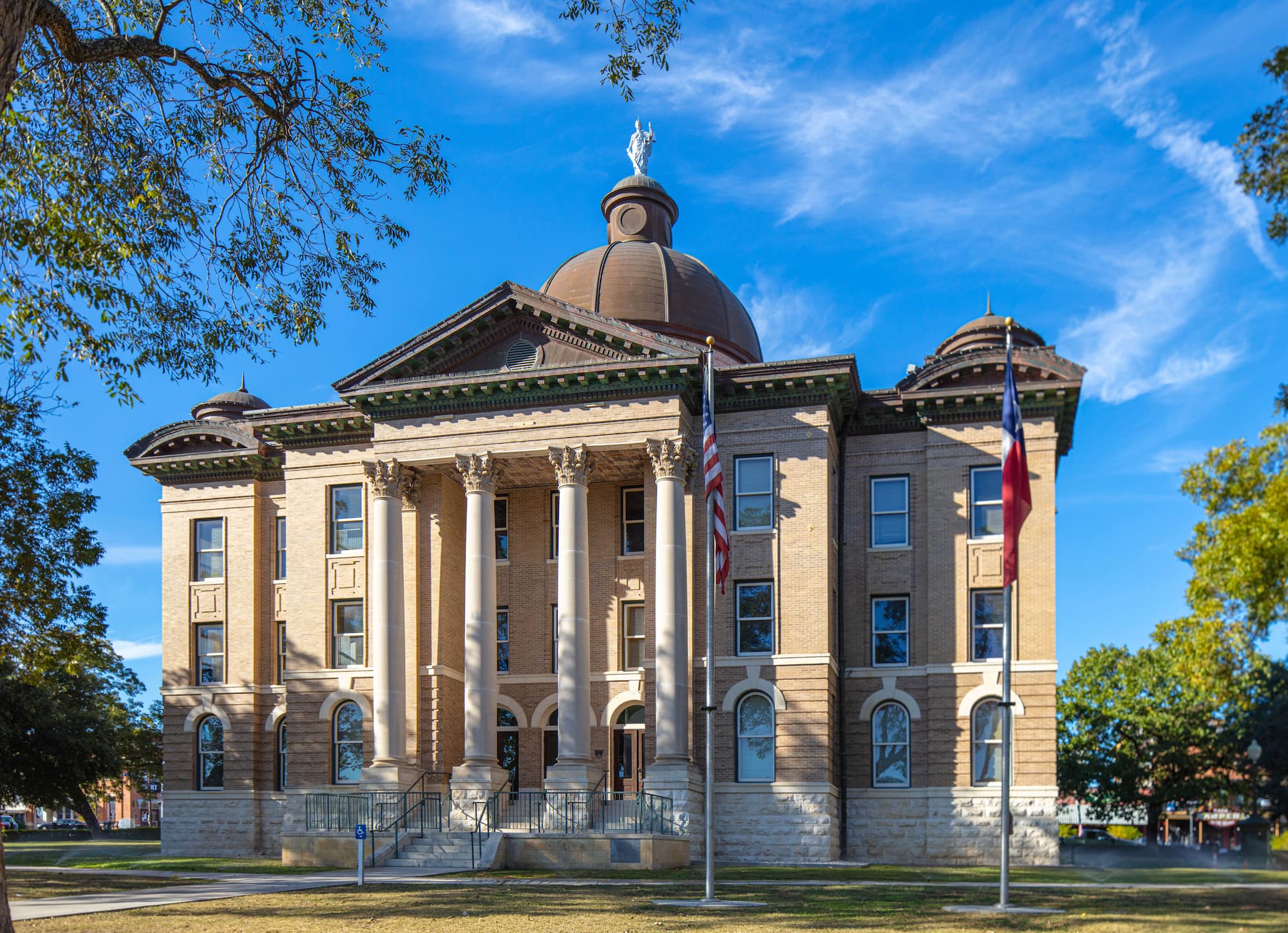
The city of Hays is small and rural, sitting west of I-35 where soil thins to caliche over limestone. On a Hays lot you’ll often hit rock a few inches down.
Lots tend to be large and open, with less established canopy than you’d find in older Kyle neighborhoods. Grass on shallow soil dries out faster and needs a different watering approach than the deep clay east of the highway, and compost is worth more per square foot in Hays than almost anywhere else we work. Drip conversions pay back fast on ground that shallow. The Green Dude covers Hays as part of the western route out of Kyle.
Creedmoor
Creedmoor is northeast of Kyle in southern Travis County, small enough that most of the work there is repeat business on properties we’ve already been in. Lots are generally large with plenty of open sun.
The soil follows the blackland pattern, heavy clay that holds water then cracks open in August, so you’ll get more out of aeration and compost than out of mowing alone. Open exposure means full-sun grass does well, and you won’t need the shade-tolerant varieties that older Kyle streets call for. Lot size drives the cost here more than frequency does, because there’s simply more ground to cover on every visit. The Green Dude reaches Creedmoor on the same routes that cover the northeast side of Kyle.
Mountain City
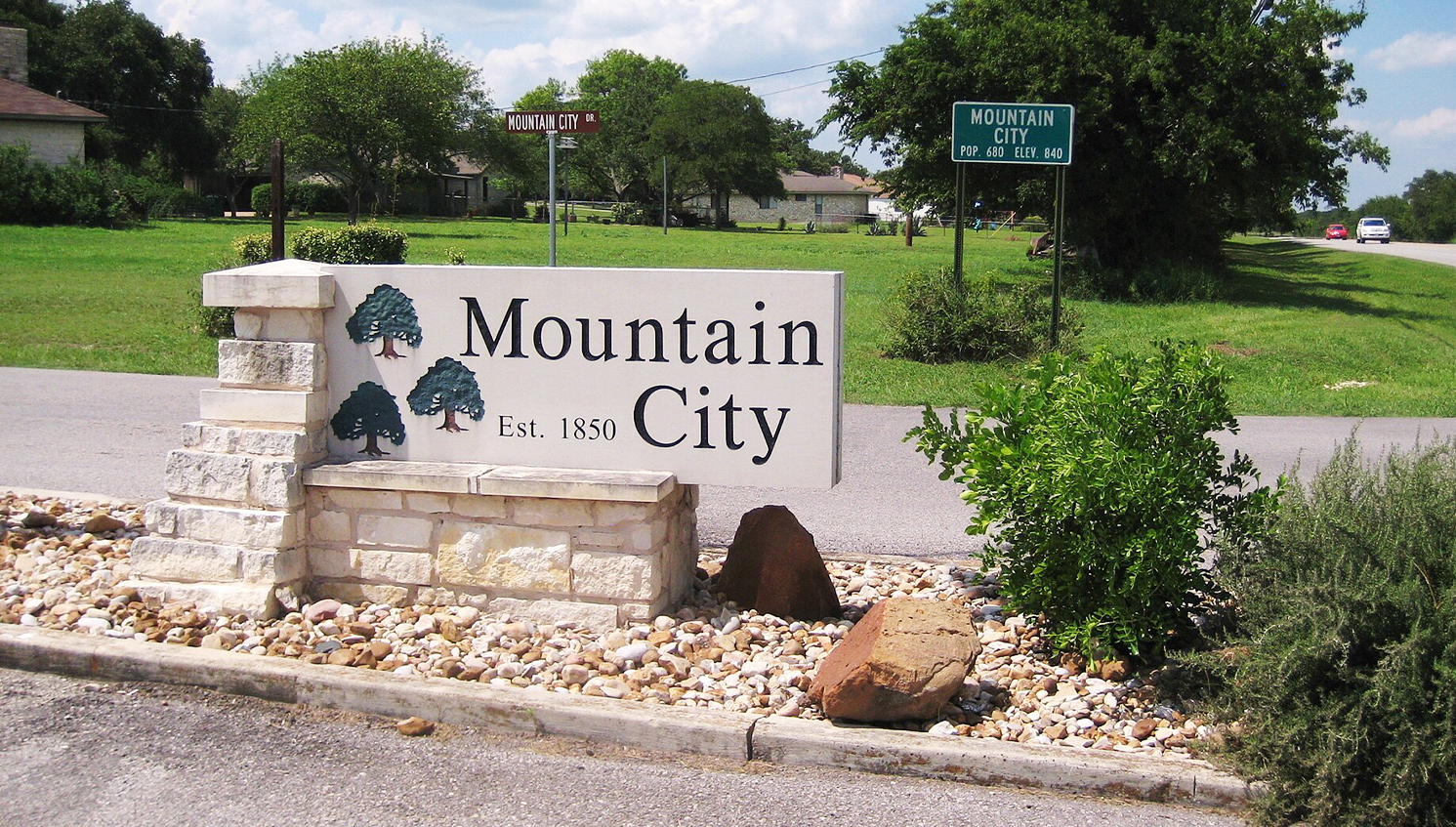
Mountain City has an unusual origin for a city. It incorporated in 1984 on the footprint of what had been a subdivision, twelve miles north of San Marcos. You won’t find a commercial strip or a through road here.
It’s a residential pocket west of I-35, on the thinner side of the soil line. A shovel can find rock well before you’d like it to. Platted lots and street trees make shade a real factor here. Grass selection matters more than it does out on open acreage. Turf that’s failing under a closing canopy is usually a tree problem first. The Green Dude covers Mountain City on the run between Kyle and Buda.
Uhland
Uhland sits right on the Hays and Caldwell county line, which is a detail that matters more than it sounds. City rules cover the whole town, but a burn ban can be on in one county and off in the other.
The settlement dates to 1860, when it was called Live Oak. German farmers came in over the decades after, and the name changed in 1900, after a poet one of them admired. The town spreads across a wide valley that Plum Creek runs through. That creek bottom is why one Uhland property behaves nothing like the one up the rise from it. Low ground holds moisture and silt. Higher ground drains fast and dries out first in August. We’ll read which one you’ve got before recommending a watering schedule, because guessing wrong here wastes a whole season.
Niederwald
Niederwald is German for brushwood. The settlers who picked the name after the Civil War were describing the mesquite in the shallow valley they’d found. The valley is still the thing that shapes a yard here.
Niederwald sits east of I-35, which puts it in the deep black clay. The thin ground over limestone is west of the highway, not here. That soil holds water, then cracks wide open in August. Core aeration and compost do more for it than mowing ever will. Watering has to go on slow so it soaks in, because clay that dry sheds a fast sprinkle straight off the surface. The town lies along the old Austin to San Antonio road east of Kyle, and we reach it on the routes that cover Uhland.
South Austin
South Austin is the far edge of where The Green Dude works. The soil question there is settled by which side of I-35 you’re on. The highway is close to the actual dividing line between two different worlds of dirt.
East and south of it you’re on blackland prairie, deep clay that rarely hits rock no matter how far down you go. It swells when it’s wet and cracks when it’s dry. That movement is strong enough to heave a patio and push fence posts out of plumb. Down along the Onion Creek bottom you pick up floodplain soil on top of that. West of the highway the ground climbs onto the Edwards Plateau and thins out over limestone. All of it runs alkaline, which is why iron shows up as yellowing grass here more than a nitrogen shortage does.
Austin has been in its Conservation Stage since September 2025. Automatic sprinklers run one day a week, but drip is allowed up to two. The limit there falls on the automatic system, not on the water itself. Hand watering stays open, and moving beds onto drip is the most useful upgrade a South Austin system can get.
Service Areas
Great everything without chemicals is a click away
Did you know?
Watch a Kyle yard across a full year and the ground itself moves. Blackland clay swells wet and shrinks dry, and it’s hard enough on some subdivisions here that the settling is documented.
Lawn Care Service Areas: Common Questions
You ask, we answer
Route days, drive time, and whose watering rules apply to your address are what people ask about most. Here’s how the service area actually works street to street.
Kyle sits at the center of it, with Buda and San Marcos the two largest markets alongside. From there the crews cover Manchaca, Hays, Creedmoor, Mountain City, Uhland, Niederwald, and far south Austin. Each city sets its own drought stage, so the watering plan changes as you cross those lines.
Roughly the Hays County footprint plus the south edge of Travis County. The practical limit is route efficiency, since a crew sitting in I-35 traffic serves fewer yards. Properties well outside that band are handled case by case, usually for larger project work.
No trip fee, and estimates are free everywhere The Green Dude works. Larger or more distant properties may price differently because of drive time built into the job. You’ll know the number before anyone starts.
They do, and it matters more than most homeowners expect. Kyle, Buda, and San Marcos each set their own drought stage and their own schedule, and the rules for drip differ from the rules for spray heads in each one. The Green Dude checks the current stage for your specific city before recommending a watering plan.
Buda is minutes up I-35 from Kyle, so turnaround there is close to what a Kyle address gets. San Marcos runs on set route days, so timing depends on where your address falls in the week. Next day estimates apply across the whole service area.
Yes. Manchaca, Hays, Creedmoor, Mountain City, Uhland, and Niederwald are all in the service area, and several sit directly on existing routes. Smaller communities often have larger lots and more acreage work, which The Green Dude handles.
Recurring mowing clients are grouped by geography so the same crew covers an area on the same day each week or every other week. It keeps drive time down and means you see familiar faces on Kyle and Buda routes. Weather pushes a route, so a rained-out day in Kyle or Buda gets picked back up as the week allows.
Yes, in far south Austin, though it sits at the edge of the service area. Neighborhoods around Onion Creek, Bluff Springs, and the Menchaca corridor are the practical range from Kyle. Austin sets its own watering rules, which differ from Kyle’s, so the plan changes across the county line.
Let’s put some hard work into your yard
Tell us what’s bugging you about the yard and we’ll say what we’d fix first, and what can wait.
Links
Services
Please Review Us
We sure could use your help letting Kyle know how good we are.
Copyright © 2026. All rights reserved.