

Why thick grass is the best weed control comes down to one fact about weeds that spray programs never mention. Weeds aren’t stronger than grass. They’re faster into open ground.
Almost every weed that shows up in a Central Texas lawn needs two things to germinate: bare soil, and light reaching it. Turf density removes both at once.
That’s the whole crowd-out method, and it explains why the same yard gets the same weeds every spring.
The Seed Bank Nobody Can Spray
Here’s the part that changes how you think about the problem. The weed seeds in your lawn are mostly already there, sitting dormant in the top inch of soil and waiting for light.
No spray reaches them. Killing what’s up this week does nothing to what’s waiting underneath.
Canopy shade does reach them, because a seed that never gets its signal never starts.
What Thin Turf Is Telling You
A thin lawn isn’t just an appearance problem. It’s an open invitation, and the weeds that arrive will tell you which kind of opening they found.
- Crabgrass along hot edges, where the canopy burned back
- Dallisgrass in open clumps, where nothing closed the gap
- Dandelion in bare patches
- Clover where nitrogen is running low
- Henbit through a thin winter
- Nutsedge where a zone stays too wet
Read them that way and each one points at a cause rather than at a product.
Mowing Height Is the Lever You Already Own
Cutting height is weed control every homeowner already owns, and on most Central Texas lawns it’s quietly working against them instead.
Raise the deck. St. Augustine carried tall shades its own root zone, and a taller blade means a deeper root under it. Scalping the lawn to stretch time between visits opens the soil surface to light at the worst possible moment.
Then check it at ground level, not from standing height. If you can part the grass and see soil across much of the yard, seed can see the sky too. That’s the honest test and it takes ten seconds.
Close What Opens, Fast
Bare spot repair matters most in the weeks right after something opens up.
Compost worked in, and sod plug patching where a strip wore through, beats waiting for runners to cross a wide gap on their own. St. Augustine has no seed, so plugs and patches are the method, not a bag of anything.
When a Lawn Can’t Thicken
Sometimes turf won’t thicken because it can’t. The ground under it is compacted, exhausted, or both.
Soil health decides how dense a lawn is able to get. Compost plus core aeration in late spring is what changes that ceiling, and no amount of fertilizer substitutes for it.
Hand weeding handles the stragglers, root and all, before anything sets seed and adds to the bank.
Mistakes Worth Avoiding
- Mowing short to buy a few extra days between visits
- Leaving a bare spot open until spring
- Watering lightly every morning instead of deeply
- Ignoring the compaction underneath
- Pulling tops and leaving roots
- Feeding the weeds along with the grass
Did you know?
A lawn’s weed seeds are mostly already in the soil, dormant and waiting for light. No spray reaches them. The only thing that beats a seed bank is grass thick enough that the light never arrives.
Thick Grass and Weeds, Answered
The crowd-out argument sounds slow to anyone used to a spray truck, so most of these questions are really about how long it takes and what happens in the meantime.
How tall should I really cut St. Augustine?
Toward the high end of what your mower offers, and never taking more than a third of the blade in one pass. The taller the leaf, the deeper the root and the darker the soil surface. Height is doing two jobs at once.
How long before thick grass stops the weeds?
A season to see it, two to trust it. The first year goes into building density and closing bare ground. By the second spring, the weeds that used to arrive on schedule are looking for room that isn’t there.
Do I still have to pull weeds by hand?
Yes, and less each year. Hand weeding handles whatever finds a gap, and a lawn that’s getting thicker leaves fewer gaps to find. It never goes to zero, and it stops being a weekend.
Will more fertilizer make my grass thicker?
Only up to a point, and past it you’re feeding the weeds too. Density comes from soil that supports roots, which means compost and aeration more than nitrogen. A lawn on hard ground can’t thicken no matter what you spread.
What about the weeds in my beds, not the lawn?
Same principle, different cover. Mulch does in a bed what a canopy does in a lawn, holding light off the soil. Beds get hand weeded and mulched, never sprayed.
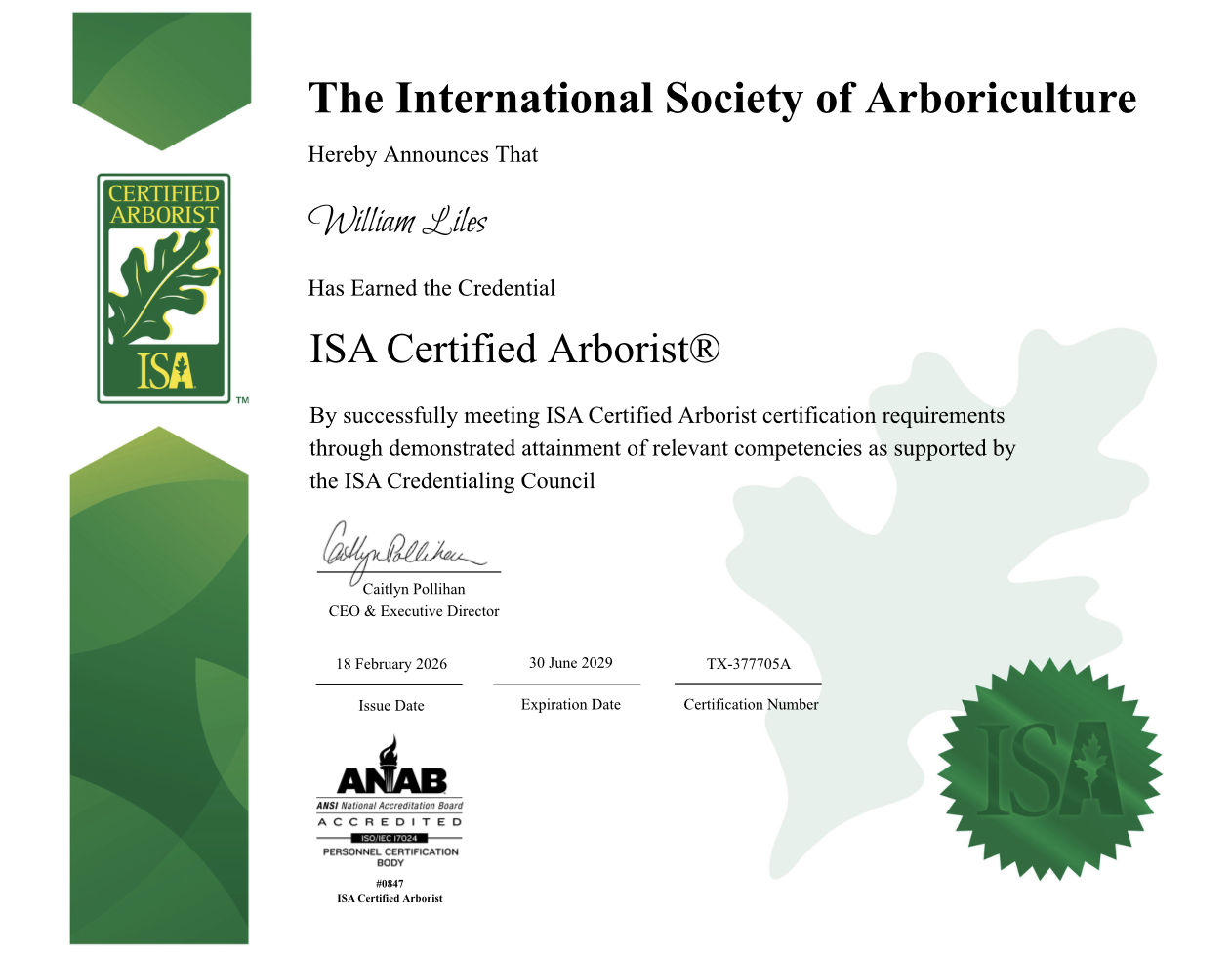
Authored by William “AJ” Liles, ISA Certified Arborist TX-377705A, TCEQ Licensed Irrigator LI0022271